
LLM security testing
Threat modelling, prompt injection, access boundaries and what a security review should deliver.
Read the security guideNEXWERK / PRACTICAL GUIDES
Plan a private AI system, test an agent's permissions or improve a business website. Start with the decision you need to make, the evidence to gather and the risks to check.
Threat modelling, prompt injection, access boundaries and what a security review should deliver.
Read the security guide
Compare prompting, retrieval and fine-tuning. Define evaluation criteria before changing the model.
Compare model approaches
Questions to ask about hosting, data permissions, connected knowledge and ongoing ownership.
Plan a private LLM
Identify inputs, approvals, exception paths and integrations before introducing automation.
Explore workflow planning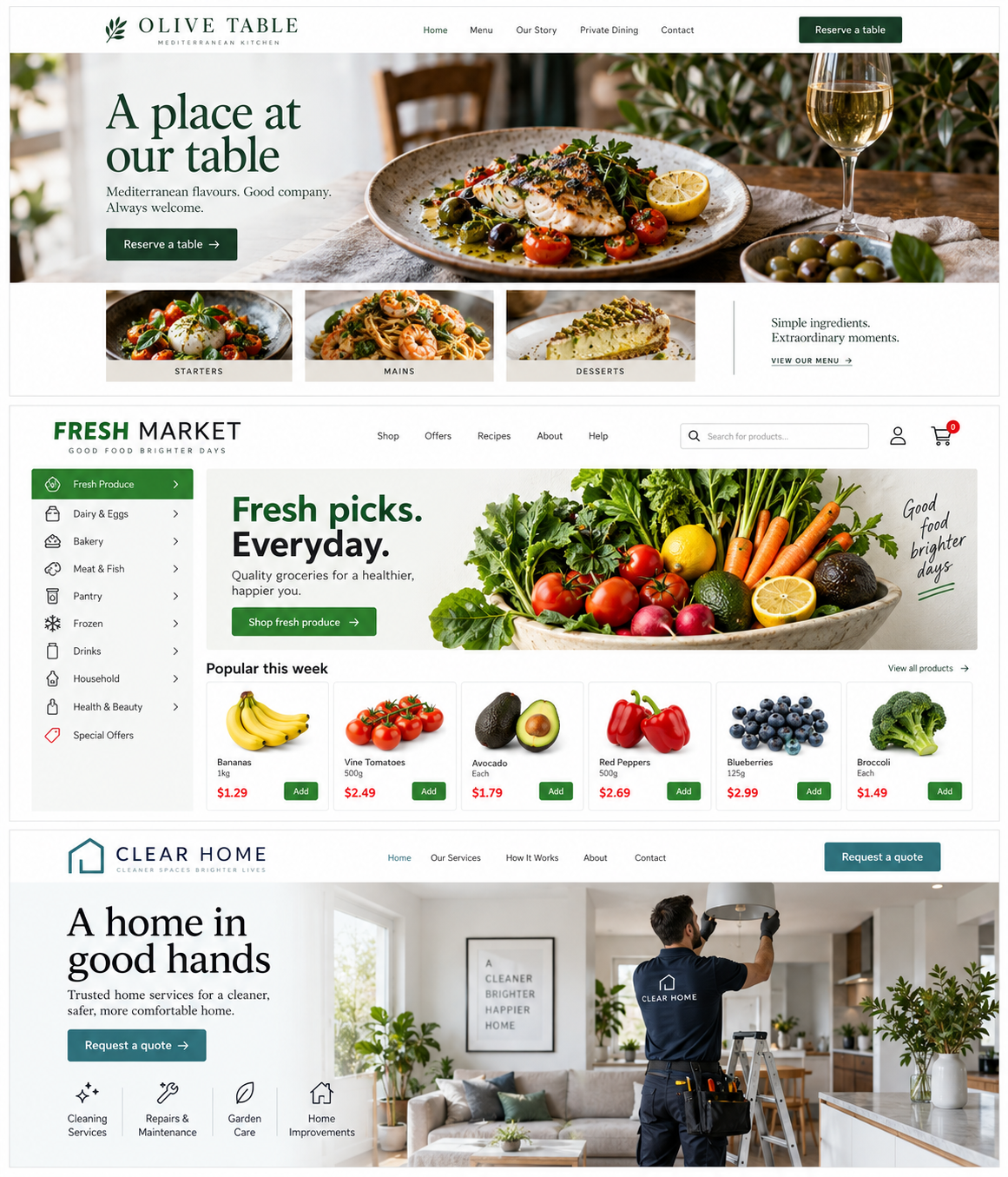
Plan menus, locations, enquiries and booking journeys for local businesses in Europe and the USA.
Explore website planning
Review crawlability, useful content, measurement and the limits of ranking promises.
Explore search visibilityReview content, search, accessibility and enquiries, then download a local report.
Open the checklistCompare retrieval, adaptation and hosting choices for a private AI assistant.
Read the comparisonTry a transparent simulation of permissions and human approval boundaries.
Try the demoExplore a fictional mobile-ready customer journey and launch considerations.
Explore the demoStart with one bounded task rather than a broad request to automate a department. A useful first brief records who does the work, what information enters, which decision follows and how success will be measured.
A visitor should be able to understand the service, verify the location or area served and complete the next step. For a restaurant that may be a readable menu and reservation. For an architect it may be project examples and an enquiry. For a supermarket it may be opening hours, categories and collection options.
Keep important information in accessible HTML, check contact links on a phone and confirm that forms really reach a monitored inbox. Measure useful enquiries or completed bookings, not only button clicks.
No. Helpful content, crawlable pages and a clear internal-link structure improve the foundations, but search engines determine indexing and ranking. AI search features do not require a separate special markup format, according to Google's guidance on AI features. Evaluate results through actual search and enquiry data.